

The Housing & Farmland Protection Workgroup is open to all housing, planning, farmland conservation, and land use professionals interested in working together to address issues that arise at the intersection of housing development and agricultural land use in New Hampshire. The workgroup meets regularly to foster dialogue, find alignment on common interests, and discover collaborative solutions with a particular focus on moving forward recommendations made in the Land Use Planning and Farmland Conservation, Access, and Succession Briefs of the New Hampshire Food and Agriculture Strategic Plan.
In the news! With working group underway, NH Food Alliance explores how to strengthen housing without encroaching on farmland
This workgroup is led by:
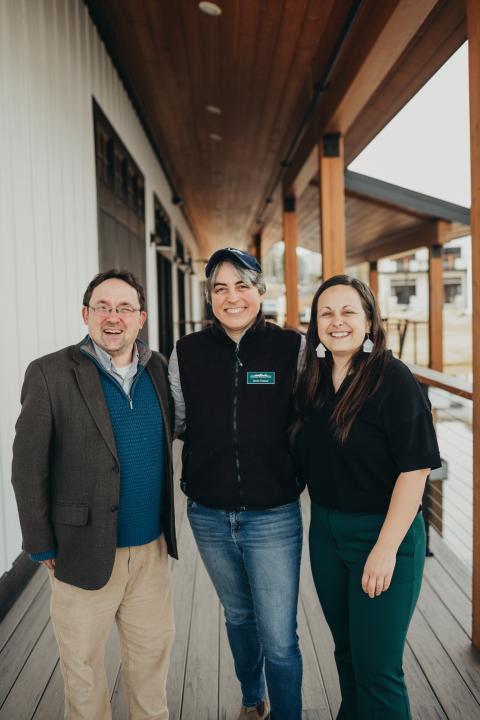
- Noah Hodgetts, Principal Planner, Office of Planning and Development, Department of Business and Economic Affairs
- Sarah Wrightsman, Manager of Community Engagement and Education, New Hampshire Housing
- Jamie Pottern, Senior New England Program Manager, American Farmland Trust
The H&FP workgroup launched in October 2025 and meets monthly on the 3rd Wednesday of the month from 10-11:30am. If you are interested in joining this workgroup, please fill out the form linked below.
This workgroup is working on:
The Housing & Farmland Protection Workgroup proposes to develop a practical, user-centered toolkit to support “win–win” solutions at the intersection of housing development and farmland protection in New Hampshire. This project directly addresses the following recommendation from the NH Food and Agriculture Strategic Plan: House agriculture-friendly tools and land use regulations on a central website, which is in the Land Use Planning Brief. The proposed toolkit will be inspired by and loosely modeled after the NH Housing Toolbox, a widely used resource developed by the New Hampshire Department of Business and Economic Affairs in partnership with New Hampshire’s Regional Planning Commissions. Like the Housing Toolbox, this project will organize practical tools, case studies, and implementation guidance in a format that is accessible to municipal officials, planners, and community leaders. The project should be complete by summer 2027.
___
